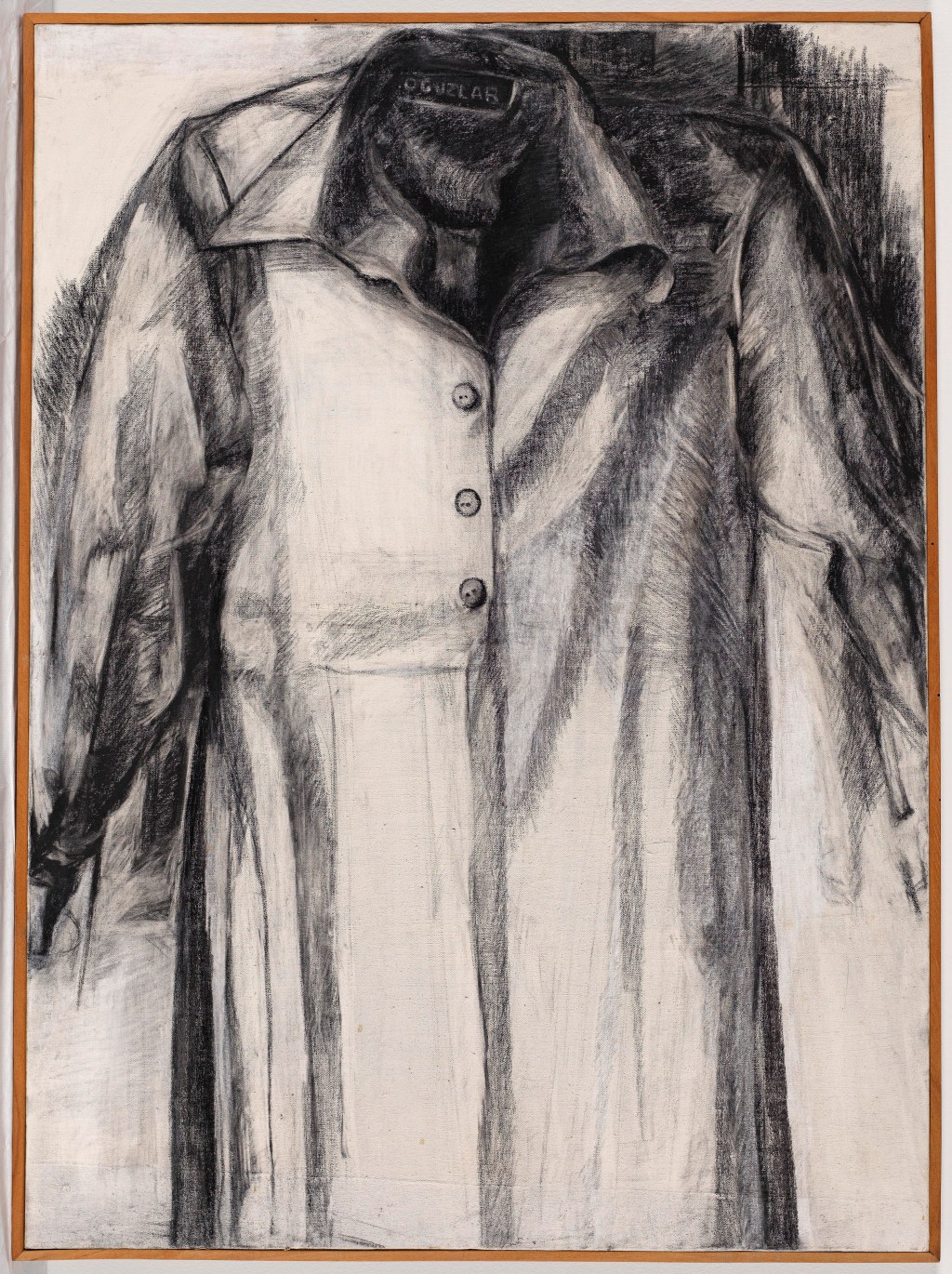
Şerife 1, charcoal and chalk on canvas, 110x80cm, 1980
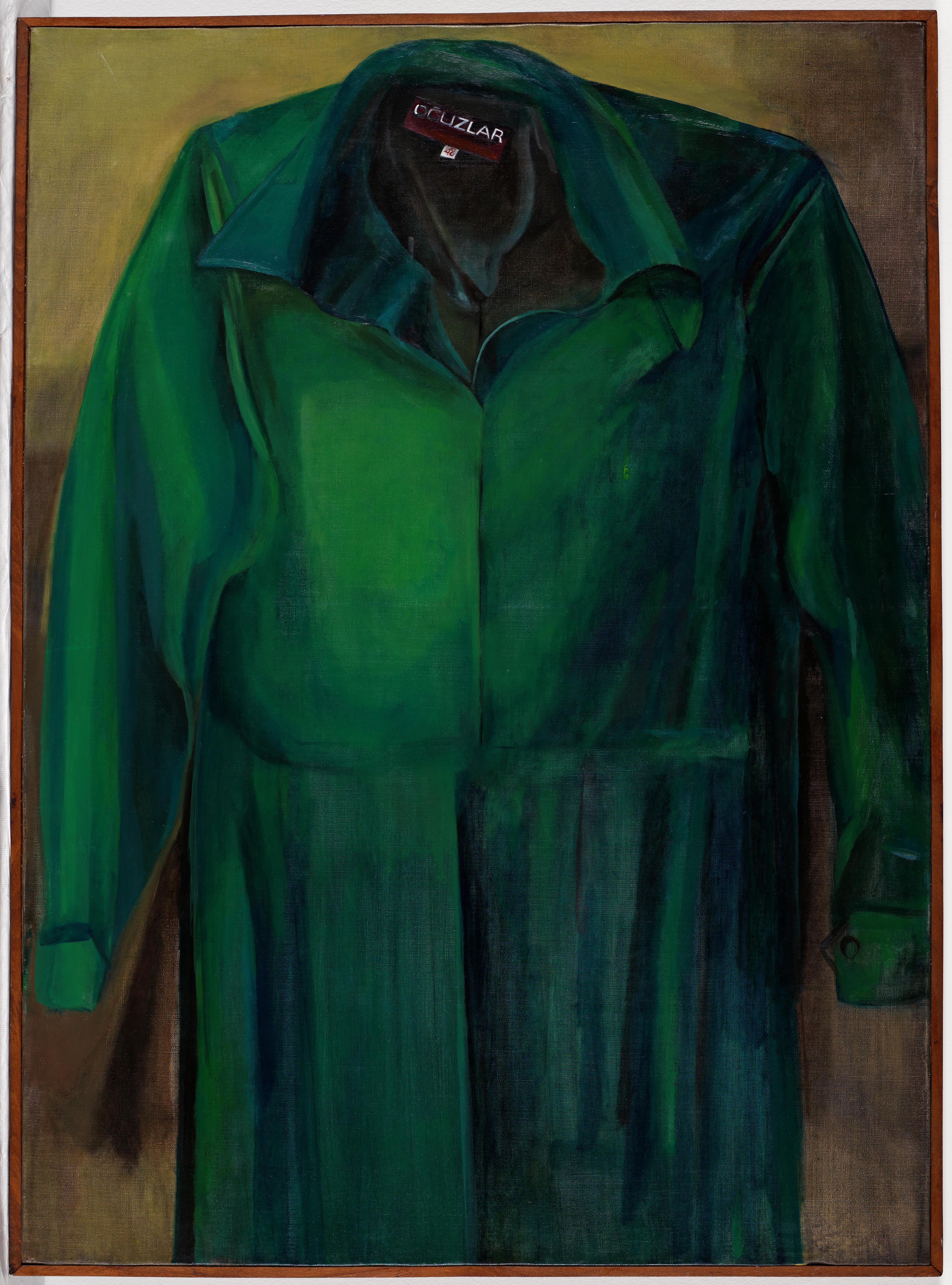
Şerife 2, oil on canvas, 130x80cm, 1980
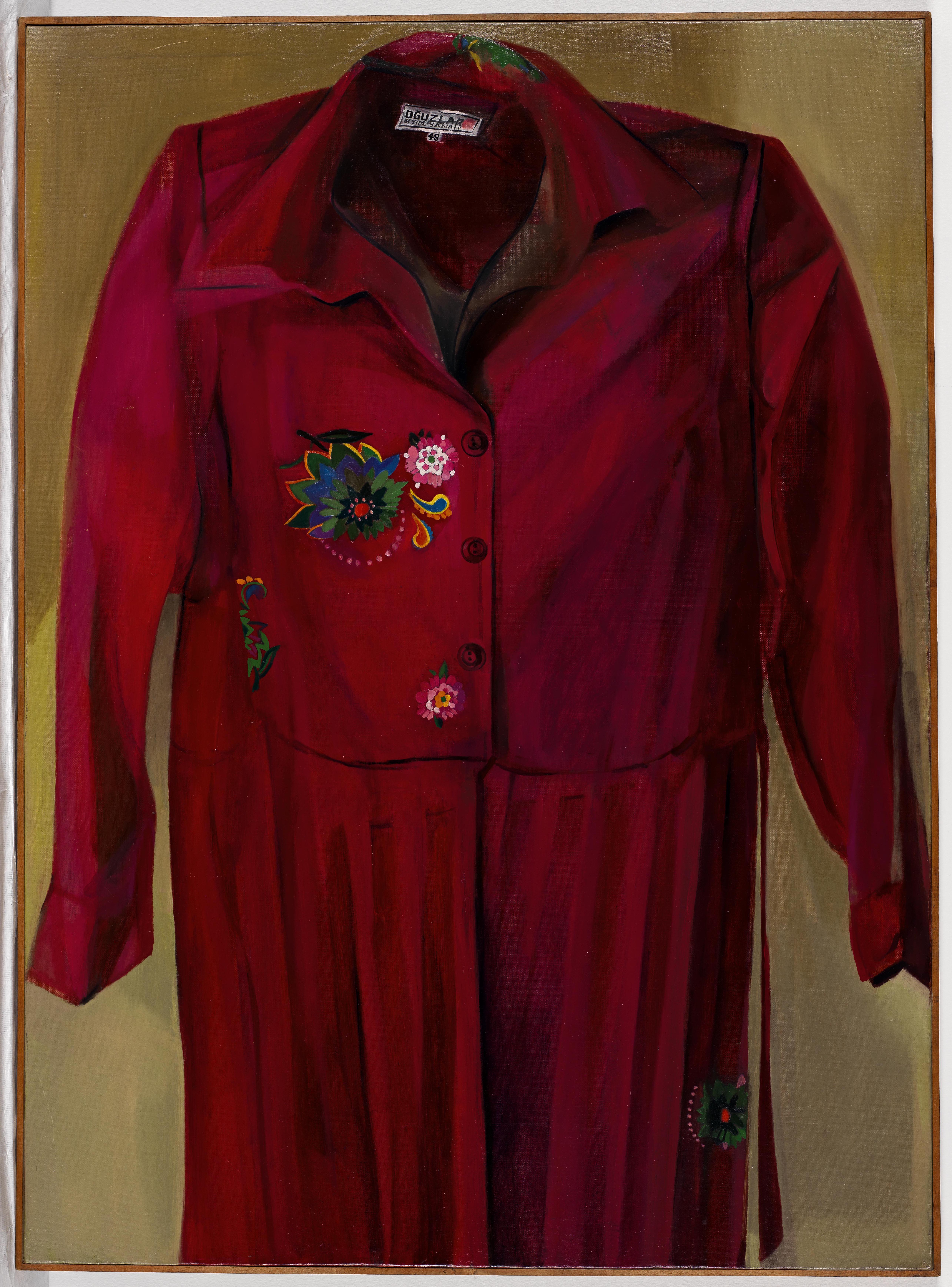
Şerife 3, oil on canvas, 130x80cm, 1981
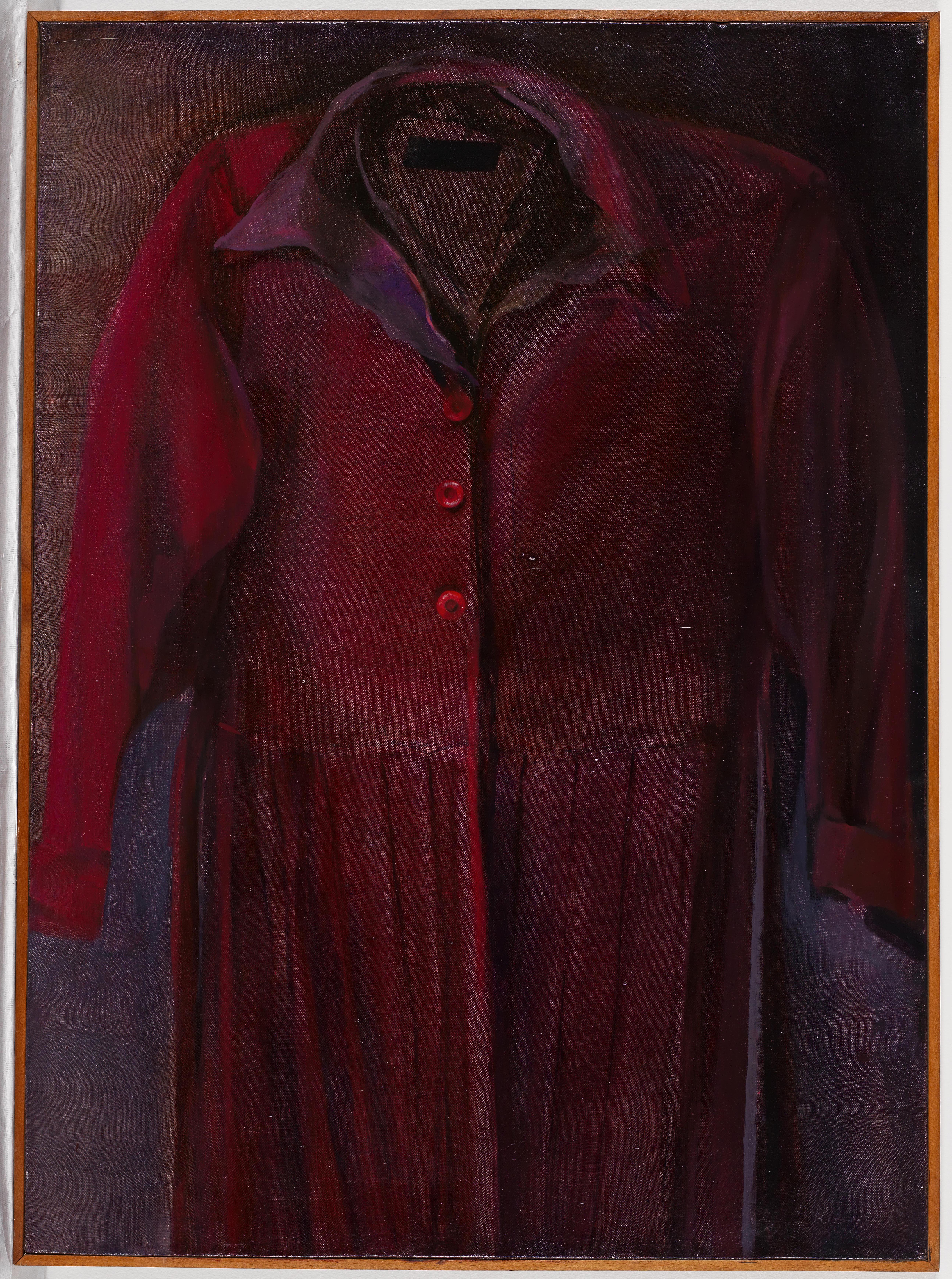
Şerife 5, oil on canvas, 110x80cm, 1981
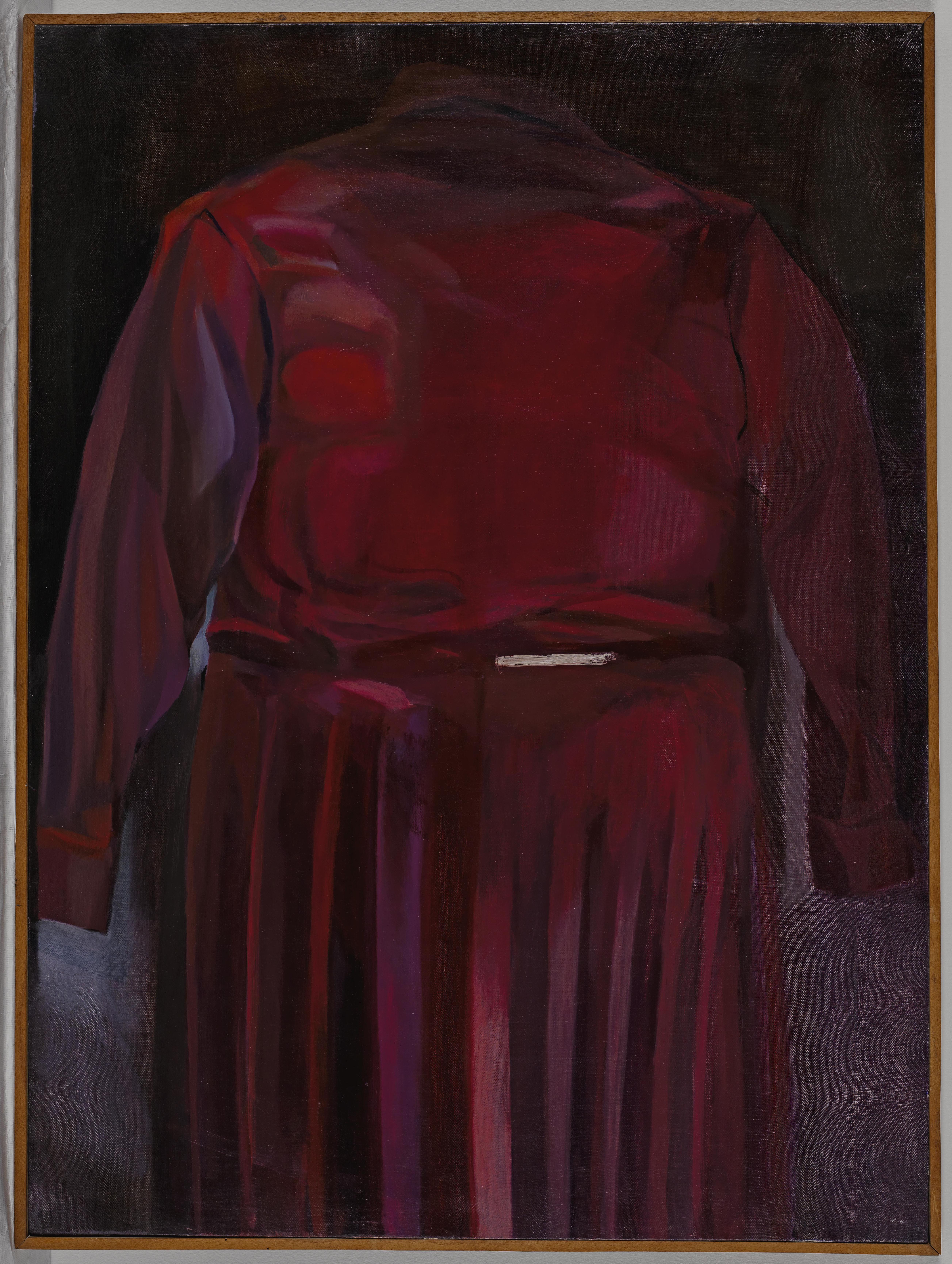
Şerife 5, oil on canvas, 130x80cm, 1981
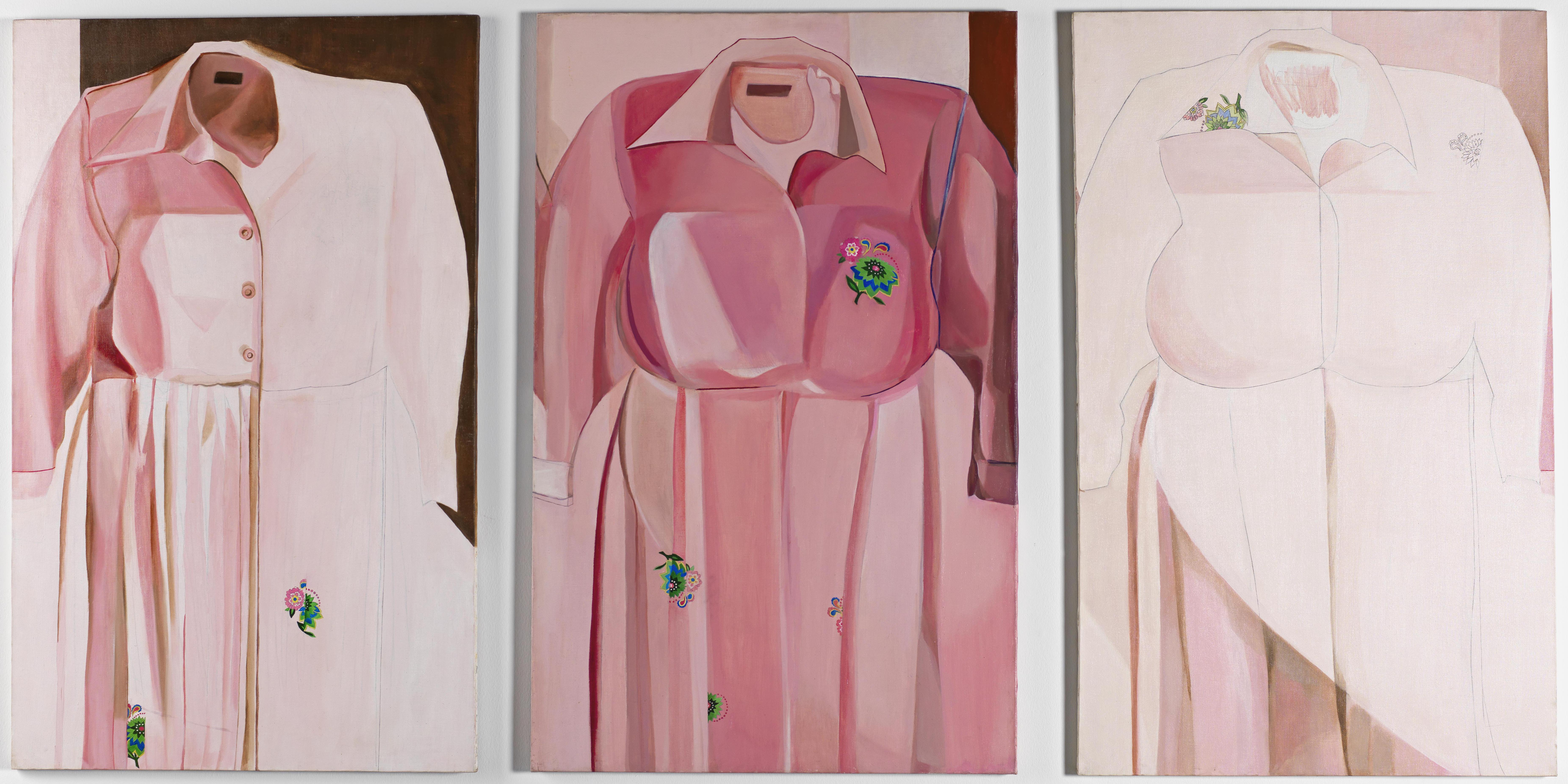
Şerife 6-7-8, oil on canvas, 3x130x80cm, 1981
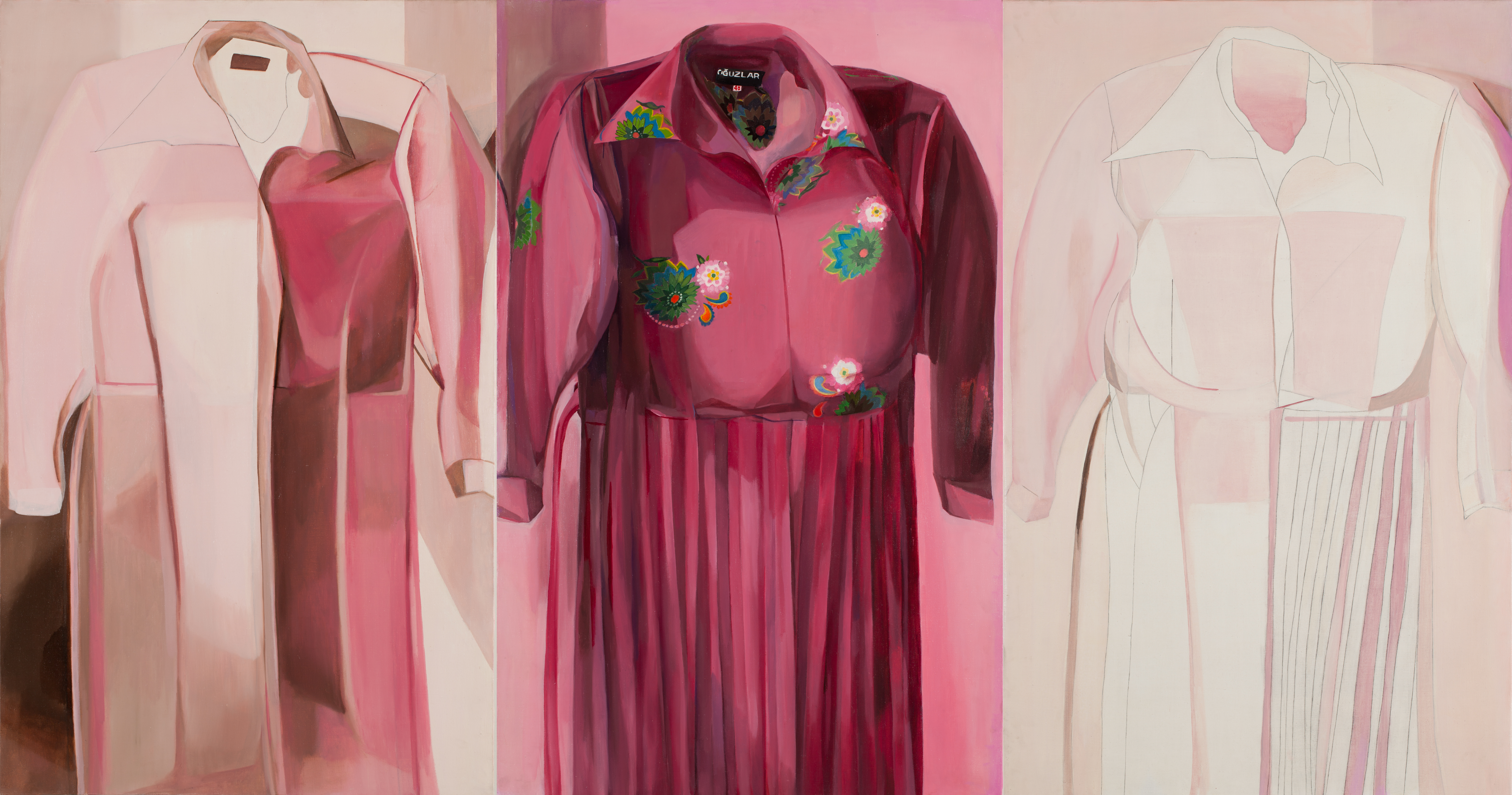
Şerife 9-10-11, oil on canvas, 3x130x80cm, 1981
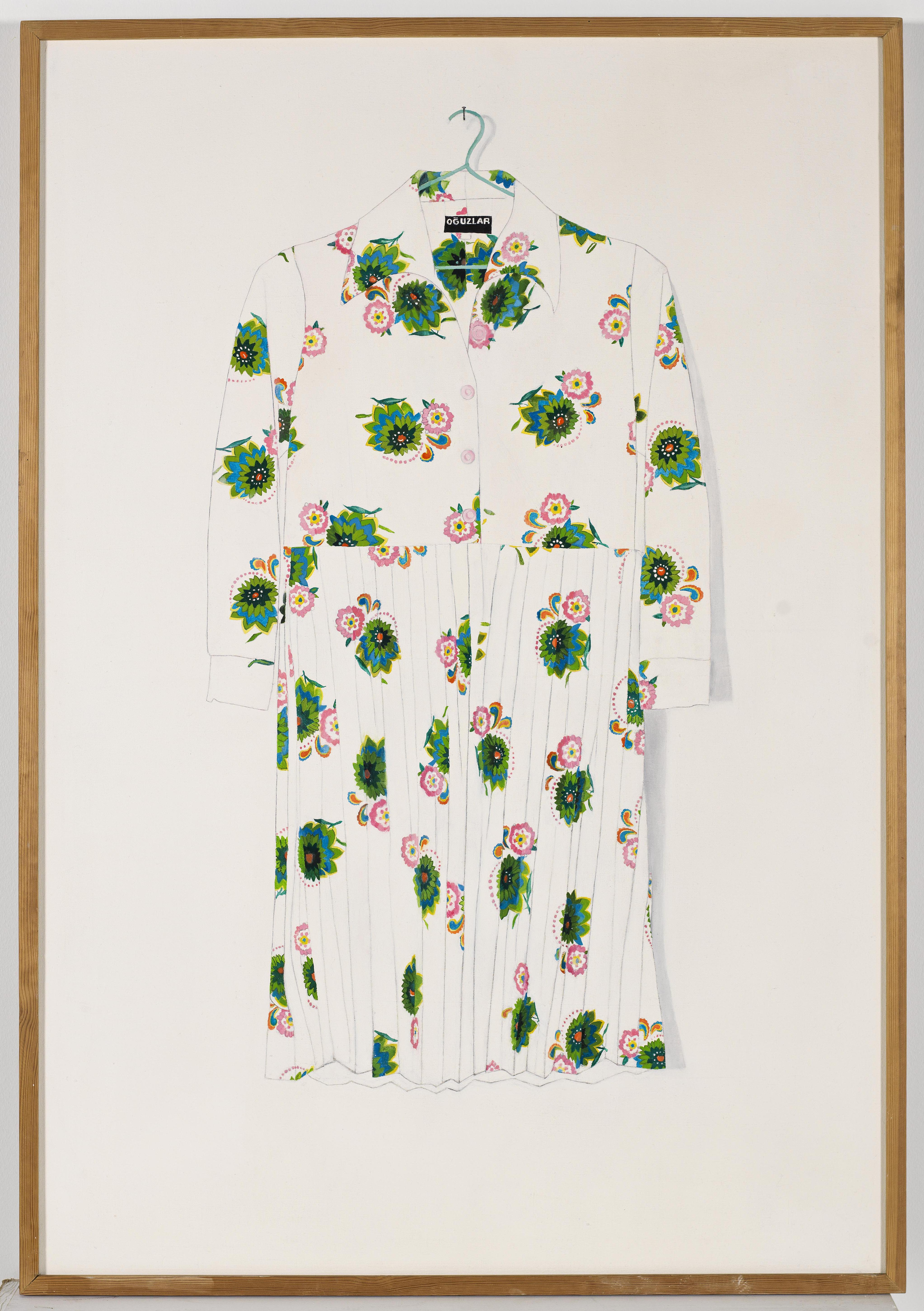
Şerife 12, oil on canvas, 162x112cm, 1982
ŞERİFE
Şerife is a series of 12 pieces (one charcoal sketch and eleven oil paintings) which İpek Duben spent two years working on. They were exposed in 1982 in the artist’s first solo exhibition upon her return to Turkey. “Fifteen months later, I had produced eleven headless Şerife. The 12th painting showed the dress on a hanger. The sack-like, formless dresses didn’t put forward Şerife’s physical presence. Her signature was her absence: the dress became a metaphor for the Turkish woman from the lower classes and as such represented each and every woman who wasn’t given the place she deserves within society.”
Şerife worked as a cleaner at the house of Duben’s sister. Duben wanted to paint her portrait but Şerife refused to pose for the paintings as she thought it wouldn’t be proper. This didn’t discourage Duben who purchased a dress from the market which she filled up with newspaper, trying to give it form – and life. This resulted in a series of paintings depicting this body without a head, an inhabited floating dress. Through Şerife, Duben wished to showcase how society renders women – and their labour – invisible. With this series, Duben also brought the question of domesticity into the art gallery, as well as the notion of internal migration – most of the women who were in Şerife’s case would have migrated from the villages to the city.
Nowadays, Şerife 1-12 is considered to be an essential feminist work, although at that point the artist didn’t consider herself a feminist. “Whereas now I can say I carry the identity of a feminist artist. There are associations, committees and groups which do very serious work in Turkey. And I am very happy to add my voice to theirs. They get their hands dirty by working in the fields, mine is work in the studio.”
İPEK DUBEN
İpek Duben was born in İstanbul in 1941.
In 1963, she moved to the United States in order to undertake a degree in political science at the Agnes Scott College, which she followed by a MA at the University of Chicago. As she was progressing towards a PhD, she decided to interrupt her studies to focus on art. She went back to Istanbul and took lessons from her friend, the sculptor Kuzgun Acar. He helped her constitute a portfolio in order to apply to the New York Studio School for Painting, Drawing and Sculpture which she attended between 1972 and 1976.
As such, Duben carried her perspective of political science and sociology from academia into art. Her works which are political often rely on archival documents and center around the themes of identity, gender and migration. She’s a multi-disciplinary artist who mixes various techniques such as painting, collage, photography, video and installation. Her work is often interactive, she makes a point of inviting the visitor into the piece, designing various experiences to engage with. For example, she invites the visitors to play in Love Game or to listen in They/Onlar. “I want the people who visit my exhibitions to participate. I am looking for ways to make them empathise with the issues and feel the pain of the tragedies they are witnessing.”
Other works: What is a Turk, Muscle Man, Suspended, Traces, They/ Onlar, Love Book & Love Game, Artemis I & II
 İSTASYON editions